

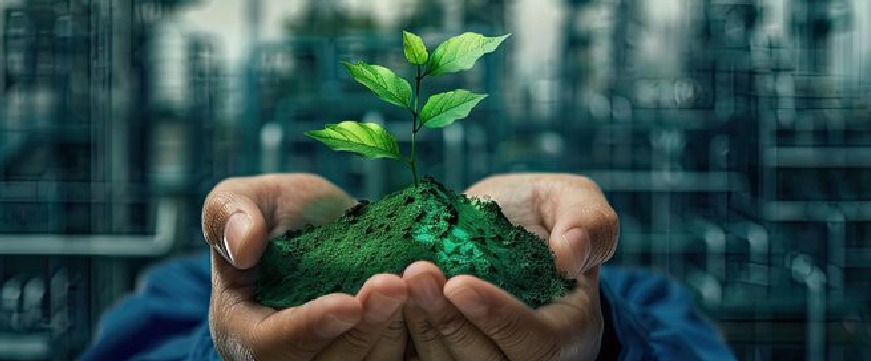
India’s industrial landscape is expanding rapidly, driven by infrastructure development, manufacturing investment, urbanization, and rising domestic demand. As this growth accelerates, industries must balance productivity with responsible use of energy, materials, and natural resources. Sustainable industrial solutions are helping businesses achieve this balance by improving efficiency, recovering valuable resources, reducing waste, and creating cleaner production systems.
For companies such as Shreeram Polymers, this transition represents an opportunity to support manufacturing through responsible material recovery and reprocessing. By giving used polymer resources another productive lifecycle, industries can strengthen supply chains while contributing to India’s long-term economic and environmental progress.
Sustainable Industrial Solutions and India’s Growth
Building Resource-Efficient Manufacturing Systems
Resource efficiency is becoming essential for Indian manufacturers. Traditional production models often depend heavily on newly extracted resources and generate materials that are discarded after limited use. Sustainable industrial systems focus instead on maximizing the value obtained from every resource.
Manufacturers can achieve this through better material planning, process optimization, recovery systems, and the integration of secondary raw materials. Recovering polymers from suitable waste streams allows valuable material to return to production rather than being permanently lost.
Turning Plastic Waste Into Productive Resources
One of the most important elements of sustainable industry is recognizing waste as a potential resource. Post-use and industrial plastic streams can contain valuable polymers that can be collected, segregated, cleaned, processed, and prepared for further manufacturing applications.
Modern material recovery processes can include sorting, washing, shredding, filtration, extrusion, and pelletization. Careful processing helps improve consistency and makes recovered polymer feedstock suitable for selected industrial uses.
Shreeram Polymers contributes to this resource-focused approach by helping transform recoverable plastics into useful secondary materials, extending their lifecycle and supporting more responsible production.
Strengthening Domestic Material Supply
India’s manufacturing growth requires dependable access to industrial inputs. Greater use of locally recovered materials can complement conventional sources and help diversify procurement strategies.
Building stronger domestic recovery and reprocessing networks can keep valuable resources circulating within the economy. Manufacturers gain additional sourcing options, while discarded materials gain renewed economic value.
Supporting Circular Production Models
Circular production is increasingly influencing how businesses design their manufacturing and material management strategies. Rather than following a linear pattern of extraction, production, consumption, and disposal, circular systems aim to preserve material value through recovery and reuse.
Polymers are particularly relevant to this transition because many properly segregated plastic streams can be mechanically reprocessed for appropriate applications. Maintaining materials within productive circulation reduces disposal pressure and encourages manufacturers to consider the complete lifecycle of their inputs.
Circular thinking can therefore support industrial growth while promoting more responsible resource management.
Technology Improving Material Recovery
Technology is making sustainable industrial solutions increasingly practical. Improved sorting equipment, controlled washing systems, filtration technologies, extrusion machinery, and laboratory testing are helping processors manage recovered materials more effectively.
Quality monitoring is especially important because recycled feedstock can vary according to its origin and previous application. Testing characteristics such as melt behavior, density, moisture, contamination, and physical performance helps determine suitability for different manufacturing requirements.
Creating Value Through Waste Management
Sustainable industrial development can generate economic value beyond environmental benefits. Material recovery creates activity across collection, segregation, transportation, processing, testing, and manufacturing.
When industries establish organized recovery channels, materials previously treated only as waste can become useful inputs. This encourages better segregation practices and supports businesses involved throughout the recovery ecosystem.
Meeting Evolving Market Expectations
Industrial buyers increasingly evaluate suppliers on factors beyond price and availability. Material traceability, responsible sourcing, recycled content, environmental performance, and transparent processing practices are becoming more relevant in procurement decisions.
Indian manufacturers that strengthen these capabilities can position themselves effectively in supply chains where sustainability requirements are growing.
Encouraging Innovation Across Manufacturing
Sustainable production encourages companies to rethink product design, material selection, manufacturing efficiency, and end-of-life recovery. This creates opportunities for innovation across packaging, infrastructure, consumer products, agriculture, logistics, and other sectors.
Manufacturers can evaluate where secondary materials are technically appropriate and design products that use resources more efficiently. Processors, meanwhile, can improve sorting and formulation methods to deliver materials suited to specific applications.
A More Sustainable Path for India’s Industrial Future
India’s future growth will depend not only on how much the country manufactures, but also on how efficiently it uses resources. Sustainable industrial solutions provide a pathway for combining economic expansion with better material management, waste recovery, technological improvement, and circular production.
Shreeram Polymers supports this evolving industrial ecosystem through responsible polymer recovery and reprocessing. By transforming suitable plastic streams into useful manufacturing resources, the company contributes to extending material lifecycles and reducing avoidable waste.
As India continues strengthening its manufacturing capabilities, resource-efficient practices can help create industries that are more resilient, competitive, and prepared for future demands. Sustainable industrial development is therefore not separate from economic growth; it is becoming an important foundation for achieving growth responsibly.